BEACON
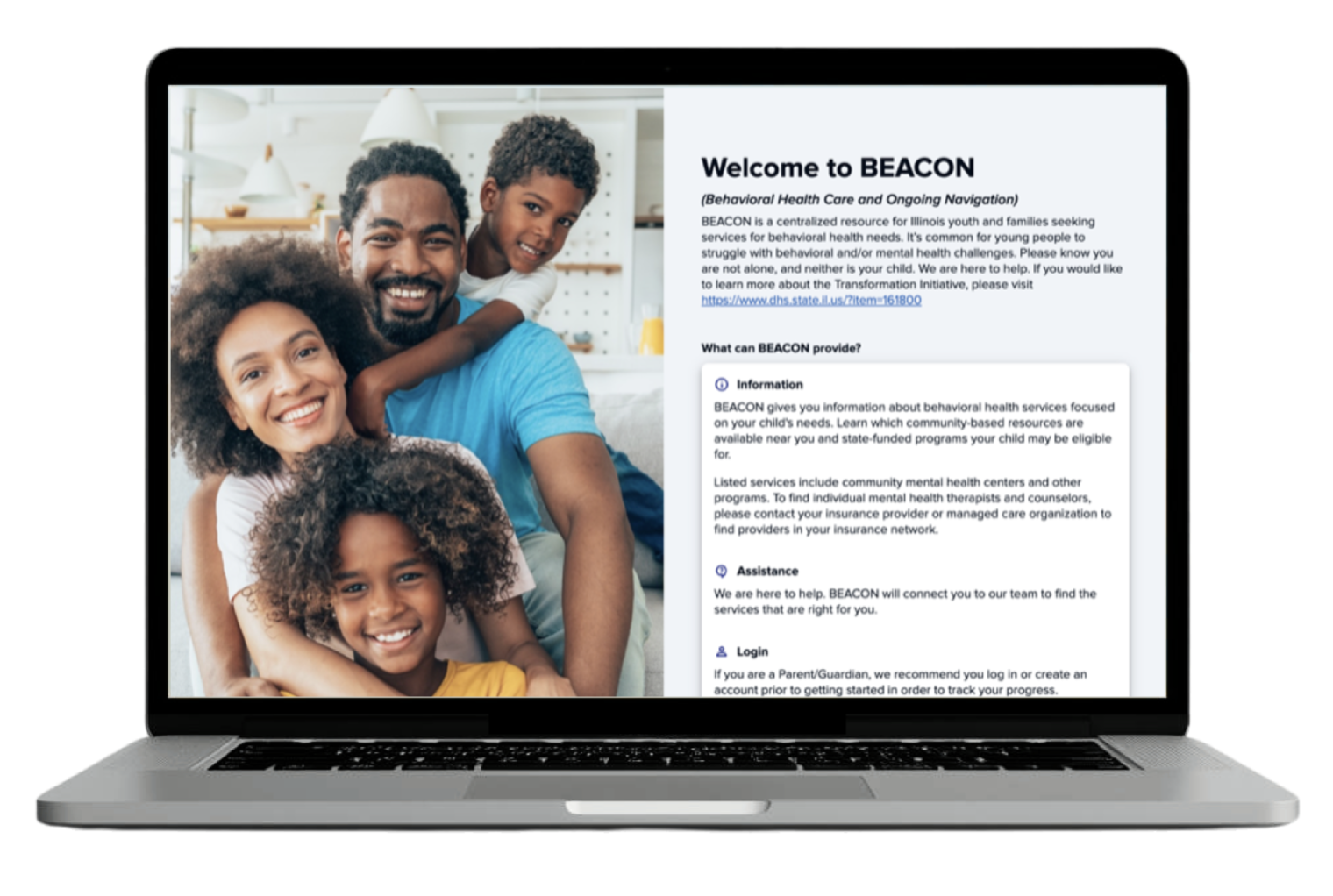
Improving access to behavioral health resources for families and state agencies
The Problem
Families seeking children's behavioral health support often run into scattered information, confusing eligibility requirements, and unclear next steps—when they're already under stress.
BEACON was launched to centralize resources and make it easier for families and caregivers to understand available services and how to access them.
The challenge was designing an experience that balanced clarity, accessibility, and trust within a complex public-sector ecosystem.
Timeline
4 month sprint.
My Approach
I started by talking with stakeholders to understand where people were getting stuck. From there I:
- Conducted and synthesized user research to understand pain points across families, providers, and stakeholders
- Identified key moments of confusion around terminology, eligibility, and navigation
- Collaborated closely with partners to align user needs, policy requirements, and technical constraints
- Used research insights to inform information architecture, content clarity, and interaction patterns
The Solution
I helped shape a more approachable experience focused on reducing cognitive load and supporting confident decision-making.
This included simplifying navigation, clarifying content through plain language and tooltips, and organizing information in ways that reflected how users actually search for help—rather than how systems are internally structured.
Impact & Outcomes
- Improved clarity around available services and next steps for families
- Reduced confusion by clarifying terminology and eligibility requirements
- Supported alignment across stakeholders around a shared, user-centered structure
- Helped establish a foundation for ongoing iteration and usability improvements
The Results
This project reinforced the importance of designing for clarity and emotional context, especially in public-sector and healthcare experiences where trust and accessibility are critical.
View the case study in my portfolio